
The short answer
Most herniated discs improve with time and conservative care. Cleveland Clinic reports that herniated disks get better on their own or with nonsurgical treatment for 9 out of 10 people. Spinal decompression is one gentle, non-surgical option that may help some people, but it is not right for everyone and usually fits inside a broader plan.
- Many herniated discs improve over weeks with conservative care.
- Options include activity changes, exercise, chiropractic care and decompression.
- Spinal decompression is gentle traction, and it is not for everyone.
- Bladder or bowel changes or spreading weakness need urgent care.
What is a herniated disc?
If you have been told you have a herniated disc, you may be wondering whether surgery is the only way forward. For most people it is not. Herniated disc treatment usually starts with simple steps, and options like exercise, chiropractic care and spinal decompression are all conservative choices worth understanding.
Your spine is a stack of bones called vertebrae. Between them sit round cushions called discs, which absorb shock and let you bend and twist. Each disc has a firm outer ring and a soft, gel-like center, a bit like a jelly doughnut.
Herniated vs bulging disc
You may hear several names: herniated, bulging, slipped, ruptured or protruding. Cleveland Clinic lists these as names for the same basic problem, and many people use them interchangeably.
When providers do draw a line, a bulging disc usually means the disc pushes outward without a tear. A herniated disc means the soft center has pushed through a crack in the outer ring, where it can press on a nearby nerve. The diagram below compares both with a healthy disc.
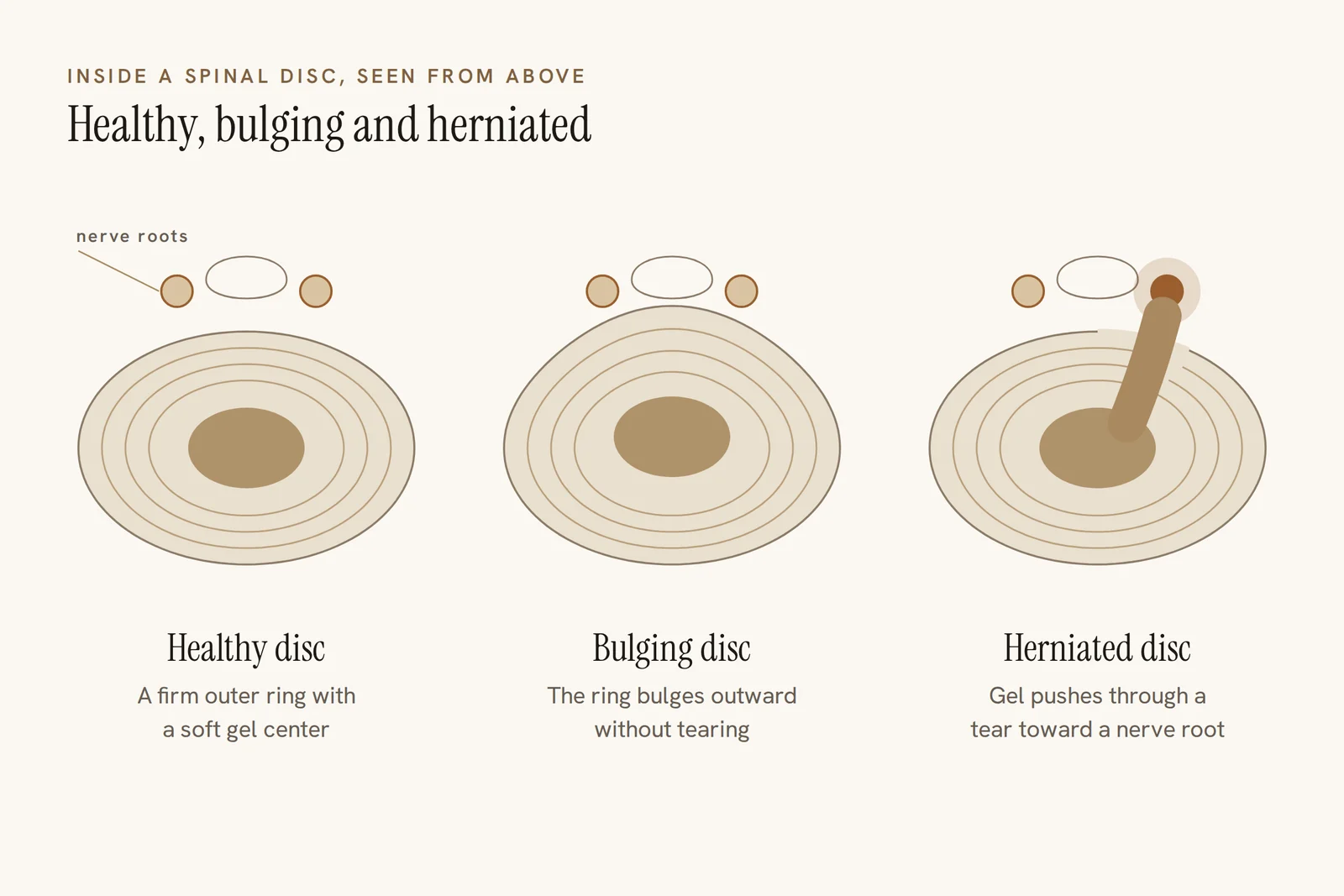
What matters most is not the label but whether the disc is irritating a nerve, and how that affects your daily life. A careful exam helps sort that out.
Herniated disc symptoms: neck vs lower back
Herniated discs happen most often in the lower back, with the neck second. They are rare in the upper and middle back. Symptoms depend on where the disc is and which nerve it bothers, and they often show up on one side of the body.
Lower back (lumbar)
- Low back pain
- Sharp pain that runs through one buttock into the leg and sometimes the foot
- Tingling or numbness in the leg or foot
- Weakness in the leg
That shooting leg pain is what most people call sciatica. If that is your main problem, this guide to sciatica pain relief covers home care and gentle stretches in more detail.
Neck (cervical)
- Neck pain, especially at the back and sides
- Pain near or between the shoulder blades
- Pain that travels into the shoulder, arm, hand or fingers
- Numbness or tingling in the arm
- Pain that gets worse when you bend or turn your neck
Both types may hurt more when you cough, sneeze or laugh, or after you stand or sit for a while. Many people in Los Angeles notice it most after a long commute or a full day at a desk.
What causes a herniated disc, and how is it diagnosed?
With age, the outer ring of a disc can weaken and crack. This gradual wear, sometimes described as degenerative disc disease, is one reason disc problems become more common over time. Falls, repetitive bending or twisting, and lifting heavy objects the wrong way can also play a part.
Cleveland Clinic notes that people ages 30 to 50 are most likely to get a herniated disc. Sitting in the same position for long periods, smoking and extra body weight are other risk factors.
The exam comes first
Diagnosis starts with a careful history and physical exam. A provider checks your reflexes, muscle strength and sensation, and watches how you sit, stand, walk and bend.
A common test is the straight leg raise, where your leg is lifted while you lie down. Leg pain during this test usually suggests a herniated disc in the lower back.
When imaging helps
An MRI or CT scan can show where a disc is pressing on the spinal canal or nerves. Your provider decides whether you need imaging based on your exam, how severe your symptoms are and how they change over time.
If you already have imaging reports, they can be a helpful starting point for any provider you see.
If disc pain has lasted more than a few weeks, Dr. Okhowat can examine your spine, screen for red flags and explain which non-surgical options make sense for you.
Herniated disc treatment without surgery: your options
Cleveland Clinic reports that herniated disks get better on their own or with nonsurgical treatment for 9 out of 10 people. MedlinePlus adds that pain, numbness or weakness often goes away or improves a lot over weeks to months.
That does not mean you have to simply wait. The right mix of care can help you stay active while the disc settles. Here is how the main conservative options compare.
| Option | What it is | Who it may suit | What to expect |
|---|---|---|---|
| Time and activity changes | A short rest of 1 to 3 days if pain is severe, then a gradual return to normal activity | Most people, especially in the first few weeks | No heavy lifting or twisting for about 6 weeks; ease back into exercise after 2 to 3 weeks |
| Physical therapy and exercise | Guided exercises that strengthen the muscles supporting your spine and improve flexibility | Nearly everyone with disc problems | A home program plus coaching on how to lift, walk and move |
| Chiropractic care | Hands-on care such as adjustments and soft tissue work, plus corrective exercise | People who want a conservative option after screening | An exam first, then a plan with clear goals; results vary |
| Spinal decompression | Gentle, motorized traction that aims to ease pressure on the disc and nerves | Selected people with disc-related pain who pass screening | Slow, controlled sessions, usually as one part of a broader plan |
| Medicines and injections | Pain relievers, muscle relaxants or steroid injections prescribed by a physician | People whose pain limits sleep, work or rehab | Injections may help for several months but do not address the underlying problem |
Physical therapy and corrective exercise
MedlinePlus calls physical therapy important for nearly everyone with disc disease. You learn how to lift, dress and walk safely, plus exercises that strengthen your core and improve flexibility. At the office, corrective exercises and physical therapy treatments serve that same purpose.
Chiropractic care
After an exam, chiropractic care may include gentle spinal adjustments, soft tissue work and home exercises. Techniques are chosen to fit the disc problem, your comfort level and how your body responds.
Medicines and injections from a physician
A physician may suggest anti-inflammatory medicine, a muscle relaxant or a steroid injection near the nerve. MedlinePlus notes that injections may help control pain for several months, but they do not solve the underlying problem and pain may return.
What spinal decompression is, and what it is not
Non-surgical spinal decompression is a form of gentle, motorized traction. You lie on a padded table while the system slowly pulls and then relaxes in cycles, aiming to create a little more space between the vertebrae.
The goal is to lower pressure on the disc and the nerves around it, which may help ease pain for some people. The diagram below shows the idea on a lower back segment.
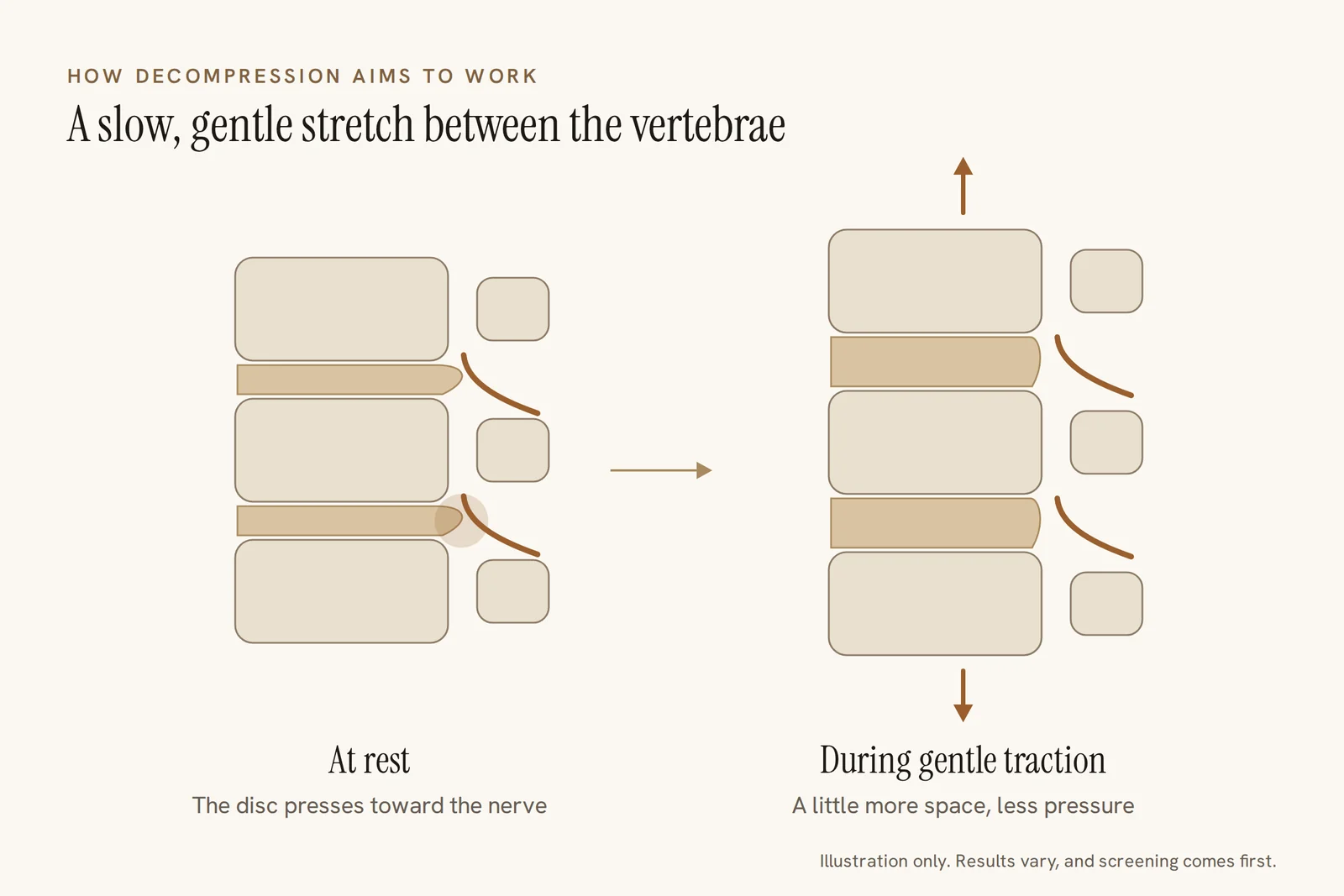
It helps to keep expectations honest. Non-surgical decompression is still being studied, results vary from person to person, and it is not a stand-alone answer. It usually works alongside exercise and posture changes.
It is also different from decompression surgery, which Cleveland Clinic describes as surgical ways to relieve pressure on the nerves. Non-surgical decompression involves no incisions and no injections.
Who should not have spinal decompression
Traction is not right for everyone. Before recommending it, Dr. Okhowat screens for conditions where it may not be appropriate, such as:
- A recent spinal fracture or serious injury
- Advanced osteoporosis or other bone weakness
- A known or suspected spinal tumor or infection
- Pregnancy
- Surgical hardware or implants in the spine
- Signs of severe nerve compression that need a physician first
When herniated disc surgery is discussed
Surgery is usually considered when symptoms do not improve with other treatments and time. Cleveland Clinic advises seeing a healthcare provider if you still have symptoms after four to six weeks of conservative care.
In rare cases, a large herniated disc can injure the nerves that control the bladder or bowels, which may need emergency surgery. The most common planned procedure is a microdiscectomy, which removes the part of the disc pressing on the nerve.
See a doctor right away if
- You lose control of your bladder or bowels
- You have numbness in your groin or inner thighs
- Weakness in an arm or leg is getting worse
- You have trouble standing or walking
- Pain began after a serious fall or car accident
- You have back pain with a fever or unexplained weight loss
In an emergency, call 911. Otherwise, please see a physician or urgent care before booking chiropractic care.
See your physician soon, too, if pain keeps you from working or your symptoms are getting worse instead of better.
What to expect at a visit for disc pain
At Okhowat Chiropractic, your first visit starts with a conversation about your symptoms, how they started and what you want to get back to doing. Bring any imaging reports you have.
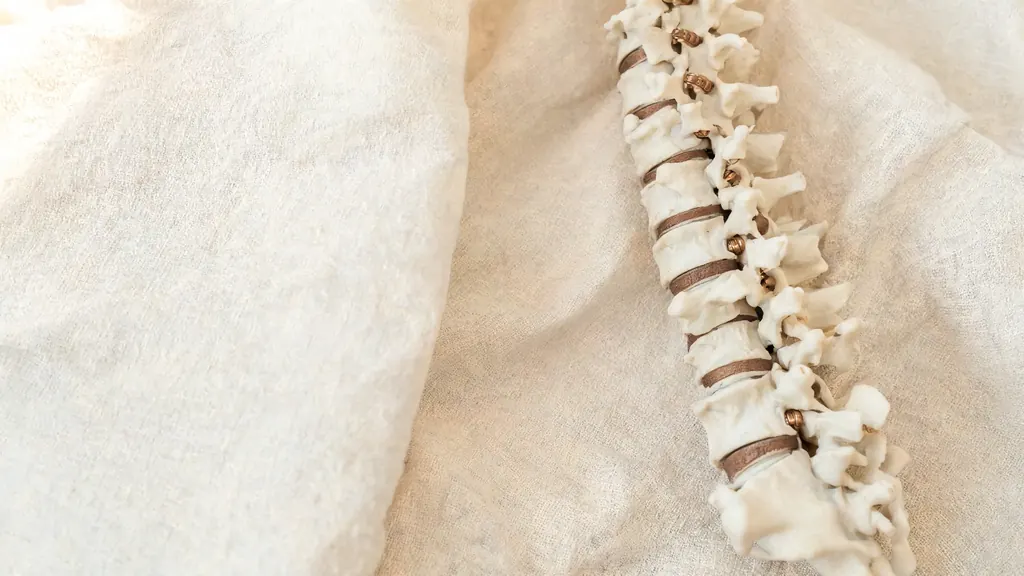
Dr. Okhowat then assesses your posture, movement, joints and muscles, and screens for anything a physician should see first. Seeing a model of the spine can make it easier to picture which disc and nerve may be involved.
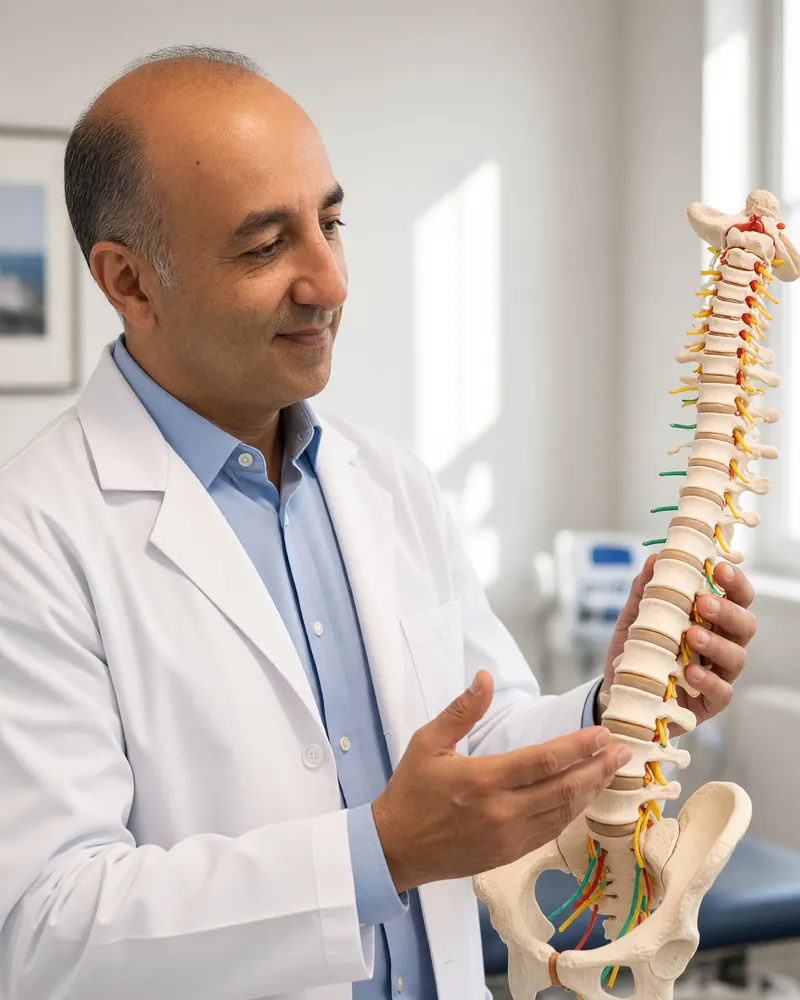
Next comes a personalized plan: what he found, what he recommends, how often to come in, and how you will know it is working. Disc problems often overlap with chronic back pain, so the plan also looks at strength, posture and daily habits.
How Okhowat Chiropractic approaches herniated discs
Dr. Omid Okhowat, DC, trained at Cleveland Chiropractic College and has over 25 years of experience. He is licensed by the California Board of Chiropractic Examiners and is a Diplomate and Fellow of the American Association of Integrative Medicine.
His approach is conservative and step by step: confirm it is safe to treat, ease pain with hands-on care and, when appropriate, decompression, then build strength and habits that protect your spine over time. If something needs a physician, he will tell you.
The office is on Wilshire Boulevard just west of Fairfax Avenue, a short drive from Hancock Park and Beverly Hills. Evening hours Monday to Thursday until 9 PM make it easier to fit care around work. Contact the office or call (323) 933-3357.
Wondering if spinal decompression fits your situation? Book an exam with Dr. Okhowat to learn which non-surgical options make sense for your disc.
Questions readers ask
Can a herniated disc heal on its own?
Many do. Cleveland Clinic says herniated disks usually heal on their own within four to six weeks, and most people feel better within about a month. If you still have symptoms after that, see a healthcare provider.
Is spinal decompression safe?
For people who are good candidates, non-surgical decompression is a gentle, low-force treatment. Safety starts with screening, which is why Dr. Okhowat checks for issues such as fractures, advanced osteoporosis, tumors, pregnancy and spinal implants first. Speak up right away if anything feels wrong during a session.
Does spinal decompression hurt?
It is meant to feel like a slow, gentle stretch, not pain. The pull is controlled, and a session can be adjusted or stopped if you feel uncomfortable.
How many decompression sessions will I need?
It depends on the exam, how long you have had symptoms and how you respond. Dr. Okhowat explains how often he recommends coming in and how you will know it is working, then adjusts the plan as you go.
Should I see a chiropractor or a physical therapist for a herniated disc?
Both are conservative options, and their goals overlap: ease pain, restore movement and build strength. What matters most is a careful exam and a plan that fits your symptoms. Plans at Okhowat Chiropractic can combine hands-on chiropractic care with therapeutic exercise.
Can sitting make a herniated disc worse?
Sitting in the same position for long periods is a known risk factor, and symptoms often flare after sitting. Getting up regularly and supporting your lower back may help, which is useful advice for anyone with a long LA commute.
Does insurance cover herniated disc treatment?
Coverage depends on your plan. Okhowat Chiropractic accepts insurance, so call (323) 933-3357 to check your plan before your first visit.
What should I avoid with a herniated disc?
Avoid long bed rest, which can leave you stiff. MedlinePlus suggests avoiding heavy lifting or twisting for the first 6 weeks after pain starts, then gradually restarting exercise after 2 to 3 weeks.
Sources
- Cleveland Clinic: Herniated Disk (Slipped or Bulging Disk)
- MedlinePlus Medical Encyclopedia: Herniated disk

About the author
Dr. Okhowat earned his Doctor of Chiropractic degree at Cleveland Chiropractic College and has practiced in Los Angeles since 1999. He is licensed by the California Board of Chiropractic Examiners and is a member of the American Chiropractic Association and the California Chiropractic Association.
- DC, Cleveland Chiropractic College
- AAIM Fellow
- AAIM Diplomate, Manipulative and Body Based Practices
- Over 25 years of experience
This article is general information, not medical advice, and is not a substitute for an exam. Please talk with a qualified provider about your situation. Individual results vary.