


The short answer
Chronic pain is pain that lasts longer than three months, either all the time or in flares that keep coming back. It often has more than one cause, and the nervous system itself can become more sensitive over time. Most people do better with a combination of approaches, such as staying active, managing stress and sleep, and hands-on care, than with any single treatment.
- Pain counts as chronic once it lasts more than three months.
- Several causes can overlap, and the nerves can grow more sensitive.
- Combining approaches tends to work better than one alone.
- New weakness, fever or bladder changes need a doctor first.
What counts as chronic pain?
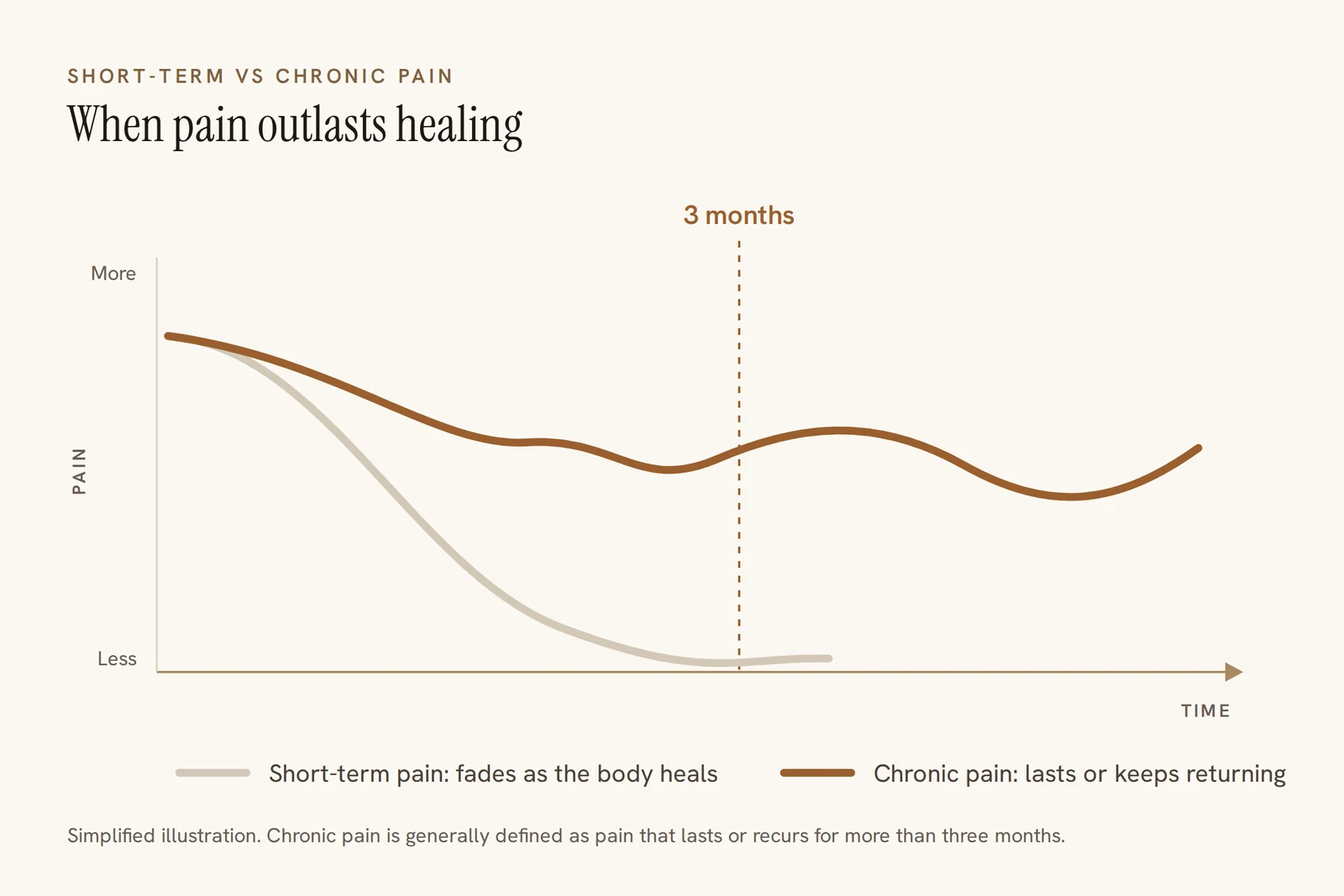
Short-term pain is your body's alarm system doing its job. You twist an ankle, it hurts, it heals, and the pain fades. Chronic pain is different: it lasts longer than three months, and it can stay steady or come and go in waves.
That long timeline is what makes it so tiring. Many people in Los Angeles keep working, commuting and caring for family while living with an ache that never quite leaves. If that sounds familiar, a chronic pain chiropractor is one of several conservative options worth knowing about, alongside your physician.
Chronic pain can feel aching, burning, shooting, throbbing or stiff. It can sit in one spot, like the lower back, or move around. It often brings poor sleep, low energy and a shorter temper along with it, which can make the pain feel even louder.
Why does chronic pain last so long?
Sometimes the reason is clear, such as arthritis or an old injury that never fully settled. Other times there is no single cause, or several smaller problems overlap. Someone might have stiff joints, tight muscles and an irritated nerve all at once.
The main types of pain
- Musculoskeletal pain: from muscles, joints, ligaments, tendons or bones, often after an injury or from wear and tear over time.
- Nerve pain: when a nerve is irritated, pinched or damaged, it can cause burning, shooting or tingling pain.
- Inflammatory pain: the body's response to tissue damage or an ongoing inflammatory condition.
- Central sensitization: changes in the nervous system that make you more sensitive to pain over time.
That last one surprises many people. After months of pain signals, the nervous system can start to turn up the volume, so ordinary pressure or movement feels sore. This does not mean the pain is imaginary. It means the system that reads pain has changed, and that is something care can work with.
The pain cycle
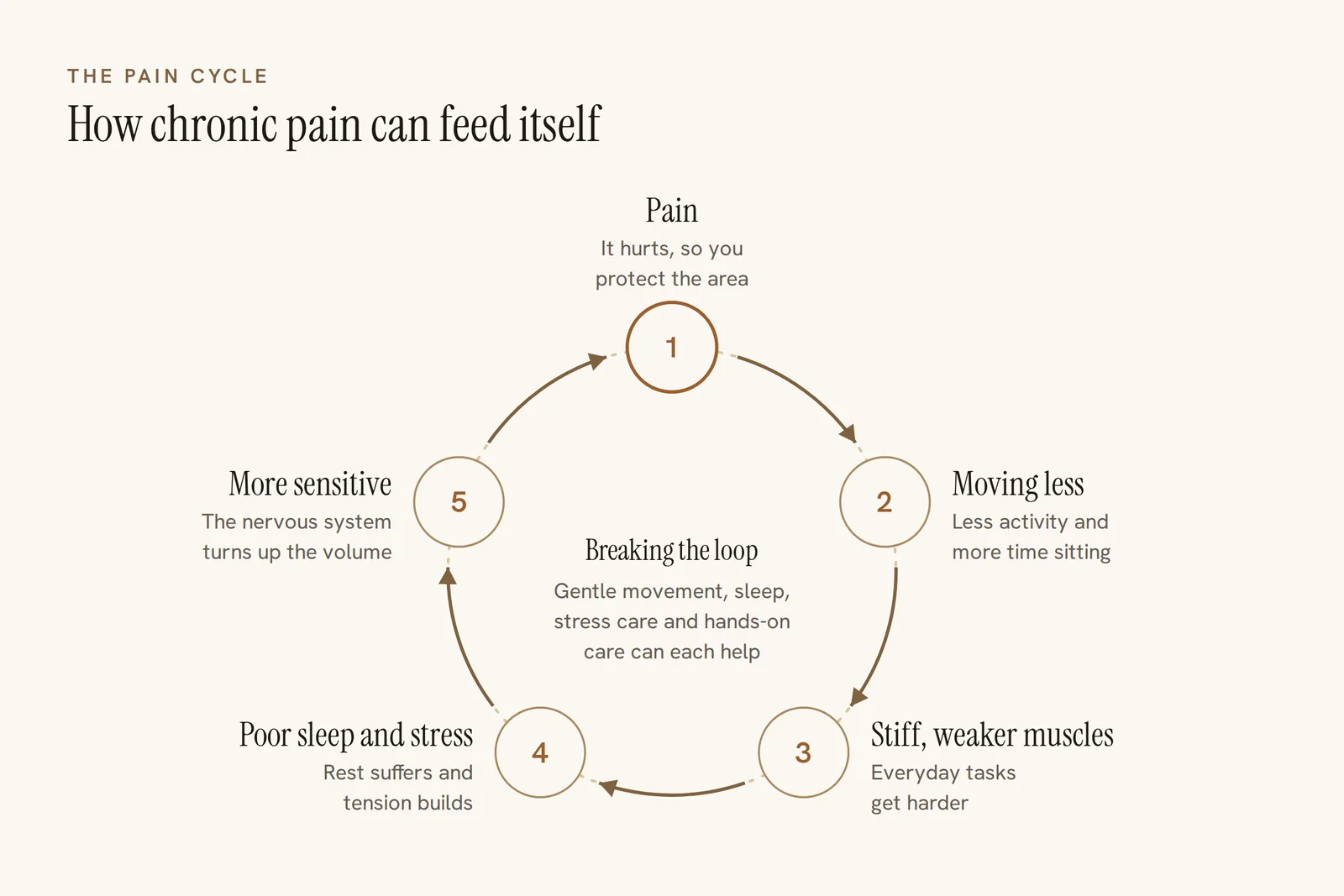
Pain also tends to feed itself. When it hurts, you move less. Moving less leads to stiffness and weaker muscles, which makes everyday tasks harder and more painful. Poor sleep and stress then make your body more sensitive, and the loop starts again.
Common types of chronic pain
Chronic pain can show up almost anywhere in the body. Some of the most common forms are:
- Back pain, especially in the lower back
- Neck pain and stiffness
- Headaches, including migraines and tension headaches
- Joint pain from arthritis, such as knee or hip pain
- Nerve pain, such as sciatica running down the leg
- Widespread pain, such as fibromyalgia
If your pain lives mostly in your spine, the pages on chronic back pain and neck pain explain what those symptoms can mean. Headaches that keep returning have their own causes, covered on the page about frequent headaches.
Who is more likely to develop chronic pain?
Anyone can develop chronic pain, but some things raise the odds. Cleveland Clinic lists these common risk factors:
- Getting older, especially for wear and tear joint and back pain
- A previous injury, such as a fall or a car accident
- Physically demanding work
- Frequent or severe stress
- Smoking
- Carrying extra body weight, which adds pressure on joints
- Family history for some causes, such as migraines
Daily habits matter too. Long hours at a desk, a tight car seat on a slow freeway commute, or a phone held at chest height all day can keep the same muscles working without a break. Small changes to posture and setup, like those taught in postural and ergonomic training, can take some of that load off.
If pain has lasted more than three months, a careful exam can help sort out what is driving it and what may help.
Ways to cope with chronic pain day to day
There is rarely one answer for chronic pain. Research summarized by Cleveland Clinic shows that combining therapies tends to reduce pain more than relying on one treatment alone. The goal is a plan you can live with, adjusted as you go.
Small steps that may help
- Keep moving gently every day, even on harder days, instead of long bed rest
- Build up activity slowly so a good day does not turn into a flare
- Protect your sleep with a steady bedtime and a cool, dark room
- Make room for stress relief, such as walking, breathing exercises or meditation
- Keep a simple log of when pain flares and what you were doing
- Set up your desk and car seat so your neck and back are supported
Gentle stretching is a good place to start for many people with back pain. The guide to stretches for lower back pain walks through simple moves and when to stop.
| Approach | What it can include | Who usually provides it |
|---|---|---|
| Lifestyle changes | Physical activity, weight management, stress management | You, with guidance from your care team |
| Movement and rehab | Physical therapy, corrective exercise, posture work | Physical therapists, chiropractors |
| Hands-on care | Spinal manipulation, soft tissue work, massage | Chiropractors, massage therapists |
| Mind and body | Cognitive behavioral therapy, mindfulness, biofeedback | Psychologists, counselors |
| Medical care | Medications, injections, procedures | Physicians and pain specialists |
When a chronic pain chiropractor can help
Chiropractic care is one conservative option for some kinds of chronic pain, especially pain that comes from the spine, muscles and joints. The NIH notes that a 2017 American College of Physicians guideline includes spinal manipulation as an option for both acute and chronic low back pain, and that there is low to moderate quality evidence it can ease chronic neck pain.
Depending on the exam, care may include spinal adjustments, soft tissue therapy for tight, sore muscles, and corrective exercises that build strength so the same problem is less likely to return.
Chiropractic care is meant to fit alongside other care, not replace it. If your physician is treating an underlying condition, a chiropractor's role is to support movement and comfort, and to refer you back when something needs medical attention. You can read more in the article on chiropractic care for chronic pain.

When to see a doctor first
Most chronic pain is not an emergency, but some signs mean you should see a physician before any hands-on care, or get help right away.
See a doctor right away if
- Pain comes with fever, chills or unexplained weight loss
- You have new weakness, numbness or tingling in your arms or legs
- You lose control of your bladder or bowels
- Pain started after a serious fall, accident or injury
- You have chest pain, trouble breathing or a sudden severe headache
- Pain is leaving you feeling hopeless or thinking about self-harm: call or text 988
In an emergency, call 911. Otherwise, please see a physician or urgent care before booking chiropractic care.
It is also worth checking in with your doctor if pain keeps getting worse, comes back after treatment, or keeps you from sleeping or enjoying your usual activities.
How Okhowat Chiropractic approaches chronic pain
Dr. Omid Okhowat, DC, has been in practice since 1999 and is licensed by the California Board of Chiropractic Examiners. His office is on Wilshire Boulevard just west of Fairfax Avenue, close to Miracle Mile, Beverly Grove and Hancock Park.
A first visit starts with a conversation about where it hurts, how long it has been going on, what makes it better or worse, and what you want to get back to. Dr. Okhowat then looks at your posture, movement, joints and muscles, and screens for anything a physician should see first.
You leave with a clear plan: what he found, what he recommends, how often, and how you will both know it is working. Care is hands on and may include adjustments, soft tissue work and corrective exercise, with a focus on strength, posture and daily habits as symptoms ease. Support with habits like sleep and activity is also available through lifestyle and wellness counseling. Questions before you book? Contact the office any time.
Ready to talk about pain that has lasted too long? Dr. Okhowat can walk you through your options at a first visit.
Questions readers ask
How long does pain have to last to be called chronic?
Pain is generally called chronic when it lasts, or keeps coming back, for more than three months. Some definitions use three to six months, or any pain that lasts longer than normal healing would take.
Can chronic pain go away completely?
Sometimes it eases a great deal when the underlying cause is found and treated. Many people manage their pain with a mix of movement, sleep and stress care, and hands-on or medical treatment. The aim is less pain and a fuller life, adjusted over time.
Can a chiropractor help with chronic pain?
For pain that comes from the spine, muscles and joints, chiropractic care is one conservative option. Spinal manipulation is listed in a 2017 American College of Physicians guideline as an option for chronic low back pain. A careful exam comes first, and anything outside chiropractic care is referred to a physician.
Should I rest or stay active with chronic pain?
For most people, gentle activity helps more than long periods of rest. Start small, build up slowly, and back off if pain spikes. If you are not sure what is safe for you, ask your doctor or chiropractor.
How many chiropractic visits will I need for chronic pain?
It depends on what the exam finds, how long the pain has been there and how your body responds. Dr. Okhowat explains the recommended plan, how often, and how you will both know it is working before care begins.
Does insurance cover chiropractic care for chronic pain?
Insurance accepted. Call to check your plan. Coverage varies from plan to plan, so the office can help you find out what applies to you.
Why does stress make my pain worse?
Stress keeps muscles tense and can make the nervous system more sensitive to pain. Frequent or severe stress is also listed by Cleveland Clinic as a risk factor for chronic pain, which is why stress care is often part of a pain plan.
Sources
- Cleveland Clinic: Chronic Pain
- NIH, National Center for Complementary and Integrative Health: Chronic Pain In Depth

About the author
Dr. Okhowat earned his Doctor of Chiropractic degree at Cleveland Chiropractic College and has practiced in Los Angeles since 1999. He is licensed by the California Board of Chiropractic Examiners and is a member of the American Chiropractic Association and the California Chiropractic Association.
- DC, Cleveland Chiropractic College
- AAIM Fellow
- AAIM Diplomate, Manipulative and Body Based Practices
- Over 25 years of experience
This article is general information, not medical advice, and is not a substitute for an exam. Please talk with a qualified provider about your situation. Individual results vary.